
Mastering The Mix: Why You Should Mix into Your Limiter?
Have you ever wondered how some of the top mixers actually use limiters while they’re mixing?
How early does the limiter go on? How hard are they hitting it? How much gain reduction is too much? And maybe the biggest question of all: what happens when the mix is finished and it’s time to hand the record off to mastering?
Do you send the loud version?
Do you take the limiter off?
Do you send both?
If the entire mix was built through a limiter, does removing it change the mix you spent hours creating?
These are questions I hear all the time, and there isn’t one universal answer. Every mixer and mastering engineer has their own approach. But I want to shine some light on how I think about the process, and why I’ve become a big believer in what I call mastering while mixing.
The idea is pretty simple: if I know the finished record is eventually going to be loud, I want to understand how the mix reacts to that loudness while I still have control over the individual elements.
I don’t want the limiter to be a surprise at the end.
The short version: Put the limiter on once the balance is established, and push it until more loudness starts costing you impact. When something breaks, fix it in the mix instead of asking the limiter to handle it. And when it’s time for mastering, send the version everyone approved plus one with the final limiter removed or reduced, and tell the mastering engineer what’s part of the sound.
Why Wait Until the Mix Is Finished?
A mix can sound completely different once you start pushing it. The kick that felt huge at a lower level might start disappearing. That 808 or sub bass can start driving the limiter on its own, and suddenly the whole mix feels squashed against the wall. The snare that felt perfectly aggressive before might start taking your head off. The vocal you felt was sitting in a great spot can suddenly feel more forward when pushed into a limiter. Or sometimes the whole record just gets smaller.
That’s the problem with waiting until the very end to think about loudness. You can spend hours getting the balance exactly where you want it, only to discover that the balance changes once the record starts approaching its final level. I want to hear those instrument relationships as true as I can, as early as I can. A limiter is a tool that can give me quick and accurate information about how that balance might feel when the record is published. I’m not trying to master the record myself. I’m using the limiter to tell me something about the mix.
When Should You Start Mixing Into a Limiter?
I don’t necessarily start every mix with a limiter working hard from the first minute. I need to establish the record first.
I want to understand the vocal, the drums, the bass and what the song is supposed to feel like. Once I have a solid balance and the record starts taking shape, that’s usually when I’ll begin pushing into AL-1.
At first, it might not be doing very much. Maybe I’m seeing a couple dB of reduction on the bigger moments. That’s enough to start telling me how the mix is going to react when it gets louder.
As the mix develops, I can push it further. And this is where mixing into the limiter becomes really useful, because every move I make from that point forward is happening in context.
If I turn the kick up, I’m not just hearing a louder kick. I’m hearing what that louder kick does to the entire record once it reaches the limiter.
If I add more sub to the 808, I can immediately hear whether I’ve actually made the record feel bigger or if I’ve just eaten up another 2 dB of headroom.
If I push the vocal forward, I’m hearing how that decision affects the density of everything around it.
Those are important relationships.
How Much Gain Reduction Is Too Much?
This is usually the next question. How hard should I hit it? Or, put another way:
“How much gain reduction should I be seeing?”
I don’t think there is a magic number.
2 dB of limiting on one record can sound more aggressive than 5 dB on another. It depends on the arrangement, transient structure, low end, tempo, production and what you’re trying to accomplish.
I’m much more concerned with what happens to the record as I push it.
Does the kick still hit?
Does the snare still have the same attitude?
Does the vocal still feel effortless?
Does the chorus still open up?
Does the low end still feel deep, or did it just become flat?
The meter is useful, but ultimately I’m listening for the point where more loudness starts costing me impact.
That’s the line.
Once I cross that line, I need to figure out why.
Sometimes the Limiter Isn’t the Problem
This is probably one of the biggest benefits of mastering while mixing.
If I push AL-1 and the record starts falling apart, I still have the entire session open. I can actually fix the problem.
- Maybe the kick transient is unnecessarily high.
- Maybe there’s sub information in an instrument that doesn’t need to be there.
- Maybe the kick and bass are stacking in a way that creates a giant peak every time they hit together.
- Maybe there’s one snare hit jumping 3 dB above the others.
- Maybe my vocal needs better level control before it ever reaches the mix bus.
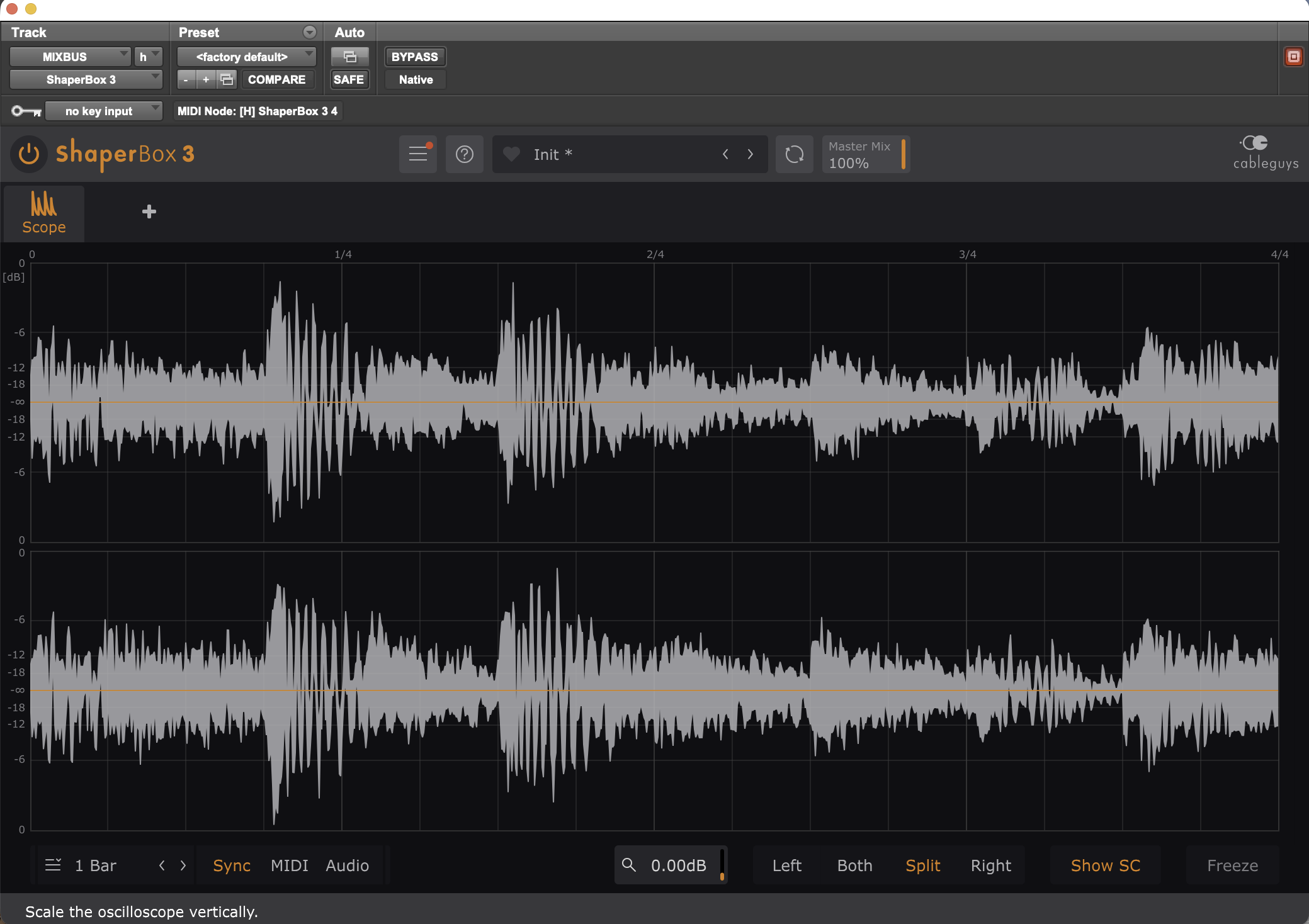 One bar of the mix bus in an oscilloscope, with a few drum hits peaking well above the rest of the mix
One bar of the mix bus. The few hits that jump above everything else are what the limiter grabs first.
These are things that become harder to address once you’re working with a stereo mix. If I’m still mixing, I can go straight to the source.
That changes the question from:
“How do I make the limiter handle this?”
to:
“How do I make the mix easier to limit?”
That is a very different way of thinking, and in my experience, that’s usually how you end up getting louder records that still feel dynamic.
Loudness and Impact Aren’t the Same Thing
There’s another trap here.
You can always keep pushing.
Another half-dB. Another dB.
Eventually the meter tells you that the record is louder, but your ears are telling you that it isn’t hitting as hard anymore.
The kick gets smaller. The snare loses its punch. The vocal starts getting aggressive. The depth disappears.
Technically, you’ve made the record louder.
Musically, you may have made it worse.
For me, the goal isn’t maximum loudness at any cost. It’s maximum loudness while preserving the impact of the mix. There’s usually a sweet spot.
The better the mix is balanced before it reaches the limiter, the further that sweet spot moves.
That’s where AL-1 becomes really useful for me. I can push the record, listen to what starts changing, and use that information to make better decisions upstream.
What About the Optimizer?
Another thing I think is important is separating peak reduction from perceived loudness. They aren’t necessarily the same thing.
If the only way you’re trying to make a record feel louder is by continuously shaving more off the peaks, eventually you’re going to run out of room.
This is where something like the Optimizer in AL-1 can become another part of the equation.
Instead of only pushing the loudest information downward, I can increase the density and presence of lower-level information.
Used correctly, that can make the record feel louder without asking the peak limiter to do all of the work.
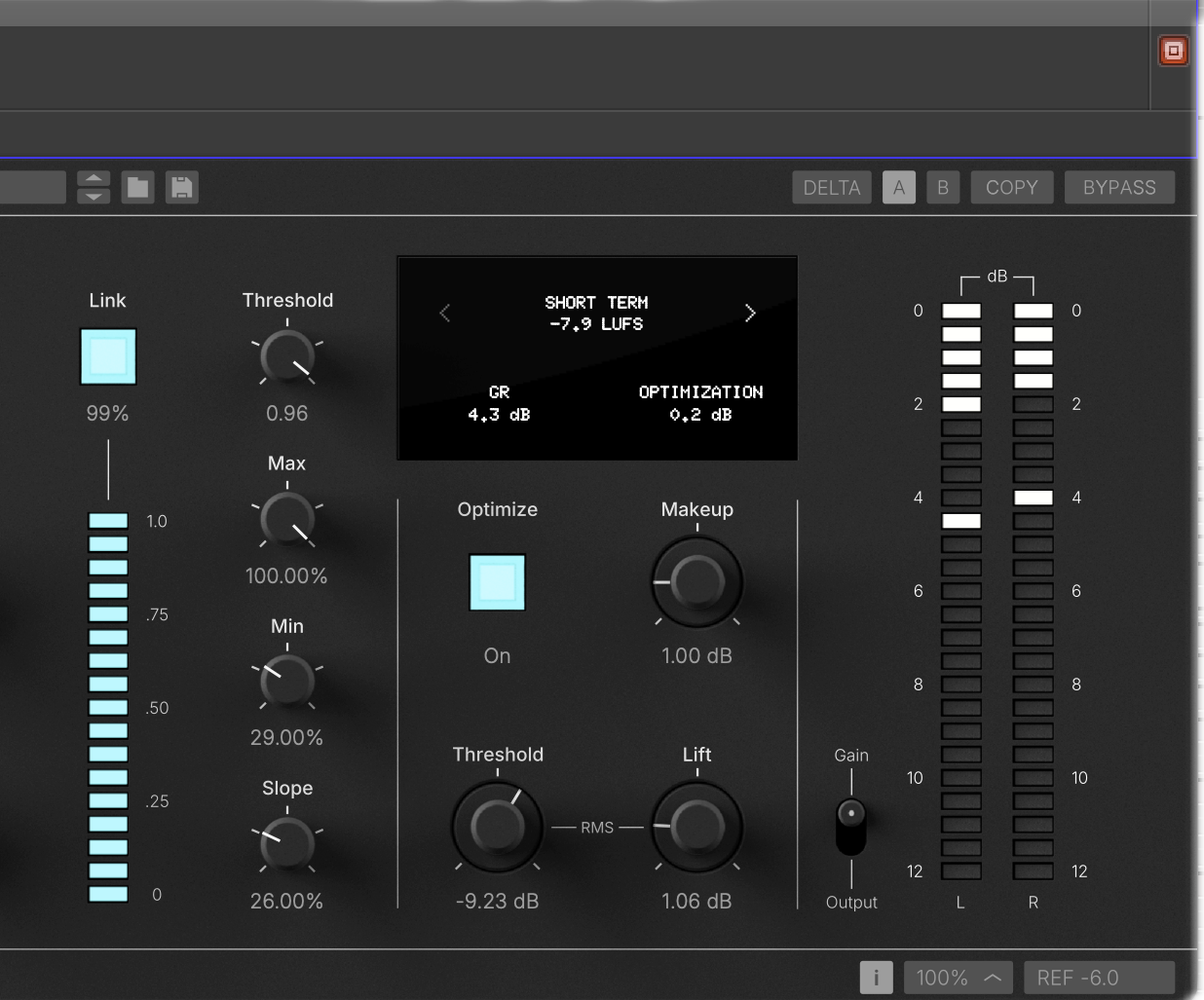 AL-1 with the Optimizer on, showing 4.3 dB of gain reduction at -7.9 LUFS short-term
AL-1 with the Optimizer on: 4.3 dB of gain reduction on the peaks, with the Optimizer adding density underneath.
But again, I’m listening to what happens to the mix.
If bringing that lower-level information forward suddenly makes the reverb feel too loud, I can go change the reverb.
If it makes the vocal feel too close, I can adjust the vocal.
If it exposes too much low-mid information, I can clean that up.
I still have access to the mix.
That’s the whole advantage of doing this before I’m finished.
Should You Send a Limited Mix to Mastering?
This is probably the most misunderstood part of the whole process.
If I’ve spent the entire mix listening through a limiter, simply taking that limiter off at the end doesn’t necessarily give the mastering engineer the same mix with more headroom.
Sometimes it gives them a different mix.
Remember, I’ve been making decisions based on how everything interacts with that limiter.
- Maybe I turned the kick up because I liked where it sat once AL-1 was engaged.
- Maybe I balanced the vocal against the density of the limited mix.
- Maybe I adjusted my low end specifically because of how it was driving the limiter.
Take the limiter away and some of those relationships can change.
This is why communication with the mastering engineer is so important.
Personally, I think the most useful handoff is often to give them context. Send the version that represents what you’ve been listening to and approving. And when necessary, give them an alternate version with the final loudness processing removed or reduced so they have room to work.
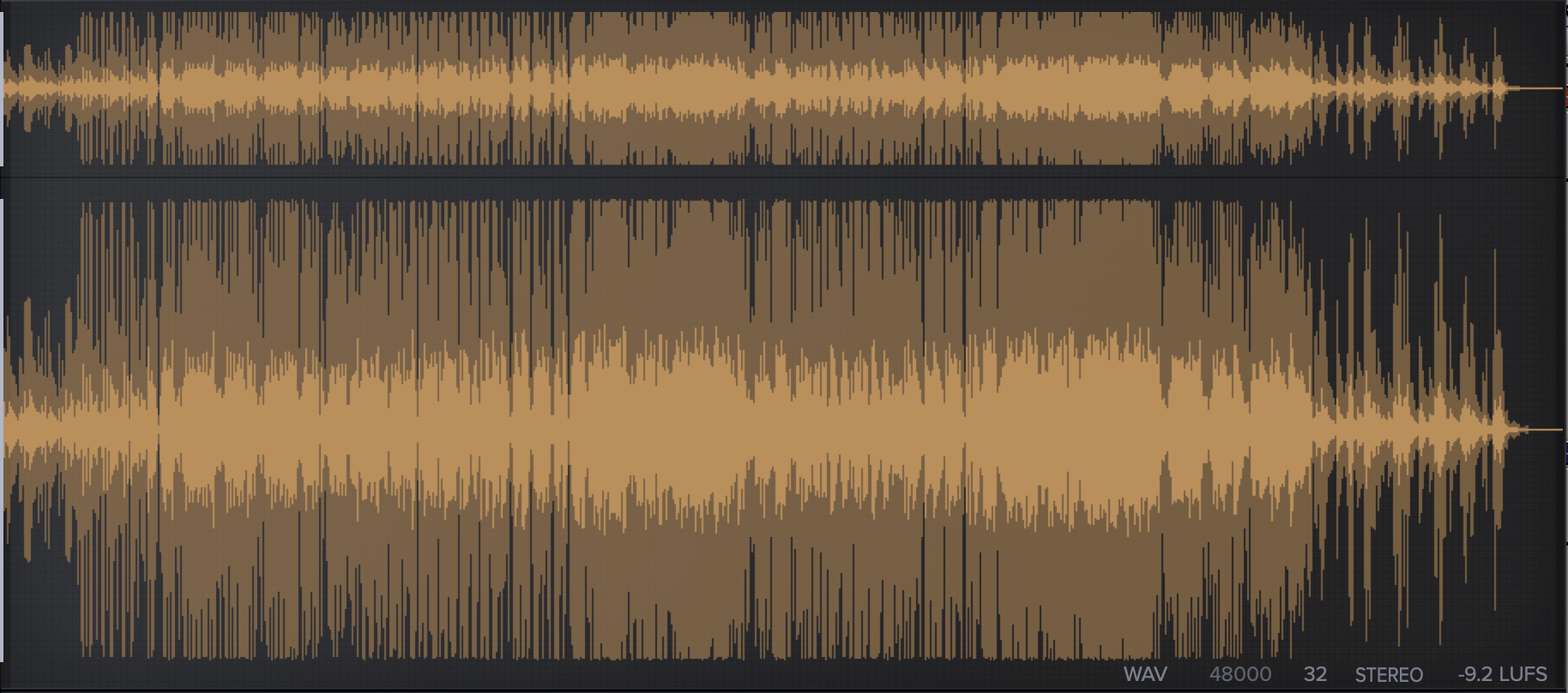 Waveform of the approved mix through AL-1, measuring -9.2 LUFS
The approved mix through AL-1: -9.2 LUFS.
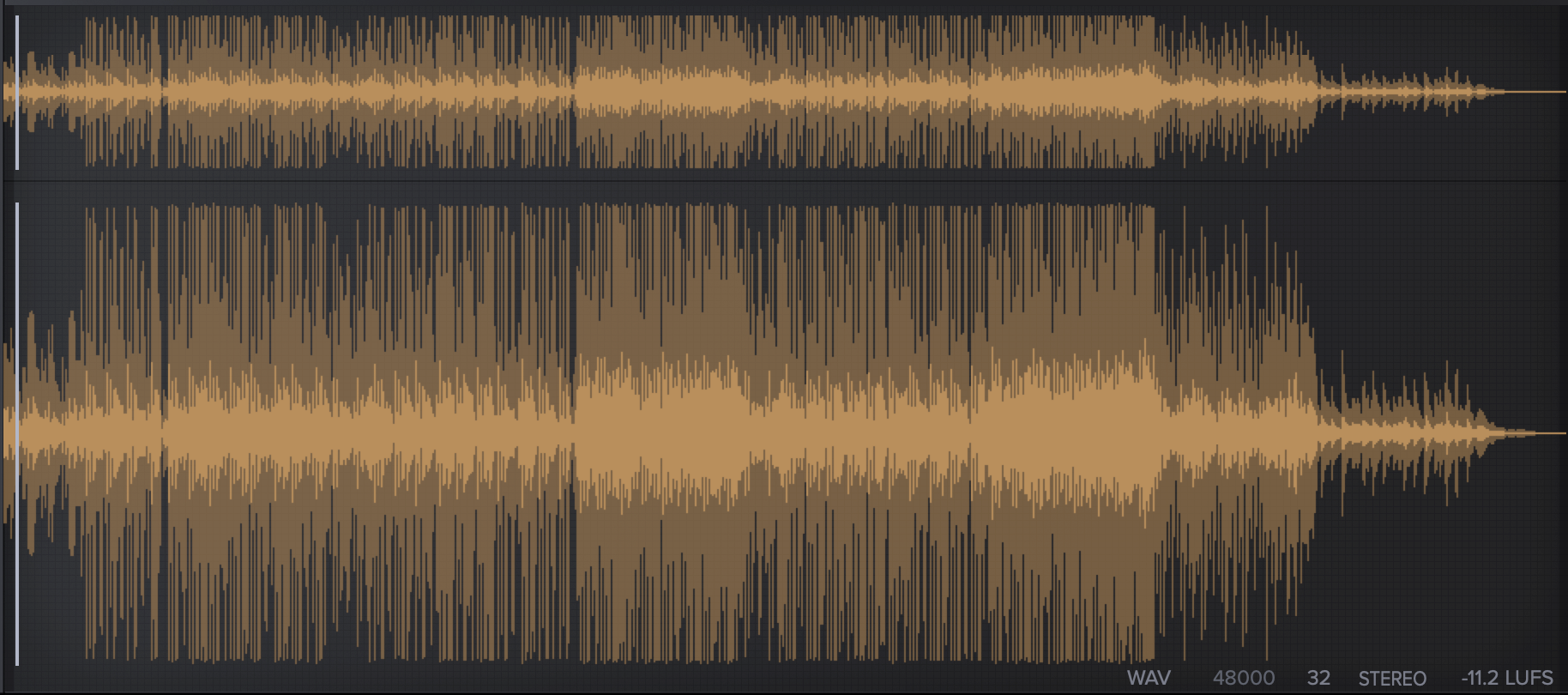 Waveform of the same mix with the final limiter removed, measuring -11.2 LUFS
The same mix with the final limiter removed: -11.2 LUFS, leaving room for mastering.
Now the mastering engineer has two things:
They know exactly what you intended the record to feel like, and they have the flexibility to get there in their own way.
That loud reference is important. It’s not just there to show them how loud you want the song.
It shows them the balance, density, punch and attitude that everyone has already been responding to.
That matters.
Don’t Remove Something Just Because It’s on the Mix Bus
I think we also need to get away from the idea that every piece of processing has to come off before mastering.
If a compressor, clipper, saturation stage or even limiter is fundamentally part of the sound of your mix, that’s different from processing you’re only using to make the file louder.
The question should always be:
Is this processing part of my mix, or is it just my final loudness stage?
Those aren’t necessarily the same thing. If taking something off changes your kick, your vocal balance, the groove or the entire feel of the record, that’s worth discussing with the mastering engineer rather than automatically removing it because somebody told you a mastering engineer “needs headroom.”
Headroom is useful. But preserving the intent of the mix is important too.
The Handoff Should Be a Conversation
At the highest level, mixing and mastering shouldn’t feel like two engineers working against each other.
The mastering engineer isn’t there to undo your mix. And as the mixer, I’m not trying to leave them nothing to do. We’re trying to finish the same record.
If I’m sending something that is already loud, I want them to know why. If there is a version without the final limiter, I’ll make that clear. If AL-1 is doing something that I consider essential to the sound of the mix, that’s useful information for them.
The better the communication is, the less guessing there is.
And that’s ultimately the point of the whole process.
Mastering While Mixing Isn’t About Mastering Your Own Record
It’s about understanding the final destination earlier. I want to know what happens when the record gets loud before I call the mix finished. I want to know if the kick survives. I want to know if the vocal stays where I put it. I want to know if the low end is actually powerful or if it’s just eating headroom. I want to know whether the chorus still feels bigger when the entire record gets denser. And if something breaks, I want to be able to go back into the session and fix it at the source.
That’s mastering while mixing.
You’re not asking the limiter to finish the mix for you. You’re using it to show you what the mix needs. And when everything is working correctly, getting the record loud becomes a lot less about fighting the limiter and a lot more about simply letting the mix do what it was already built to do.
Quick Answers
Should you mix into a limiter?
It can help, once the balance is established. It shows you how the mix reacts to loudness while you can still fix problems at the source instead of asking the limiter to cover them.
How much gain reduction is too much on a limiter?
There’s no magic number. 2 dB can sound more aggressive on one record than 5 dB on another. Listen for the point where more loudness starts costing you impact, and back off there.
Should you take the limiter off before sending to mastering?
Not automatically. Send the version everyone approved as a reference, plus a version with the final loudness limiter removed or reduced, and tell the mastering engineer which processing is part of the sound of the mix.
The Naturl Team
Written By:
Preston ‘Prizzie’ Reid
Grammy-winning Mixing Engineer (Kanye West, Usher, Omah Lay, Muni Long, Tyla)
Head of Community and Artist Relations at Naturl Audio
Edited By:
Javon ‘G400’ Gant-Graham
Grammy-nominated mixing engineer (Goldlink, Ari Lennox, Kaytranada, Elujay)
Head of Partnerships at Naturl Audio